OSE
  • Home
  • About us
    • Overview of OSE
    • Early Stage Performances
    • Pre-Opera Years
    • Hastings Opera
    • Opera South East
    • OSE Awards
    • Audience Comments
  • Join us
    • Join our Events mailing list
    • Get involved in OSE >
      • Members information
    • Join our chorus
    • Join our back-stage crew
    • Renew (or join) OSE Membership
    • Join our Auditions mailing list
  • Support us
    • Ways to help us
    • OSE Friends
    • OSE Angel
    • OSE Benefactor
    • OSE Sponsors
    • Support OSE with Gift Aid
  • Contact us
  • Last production
  • Past productions
    • All past productions
    • 2023 Carmen
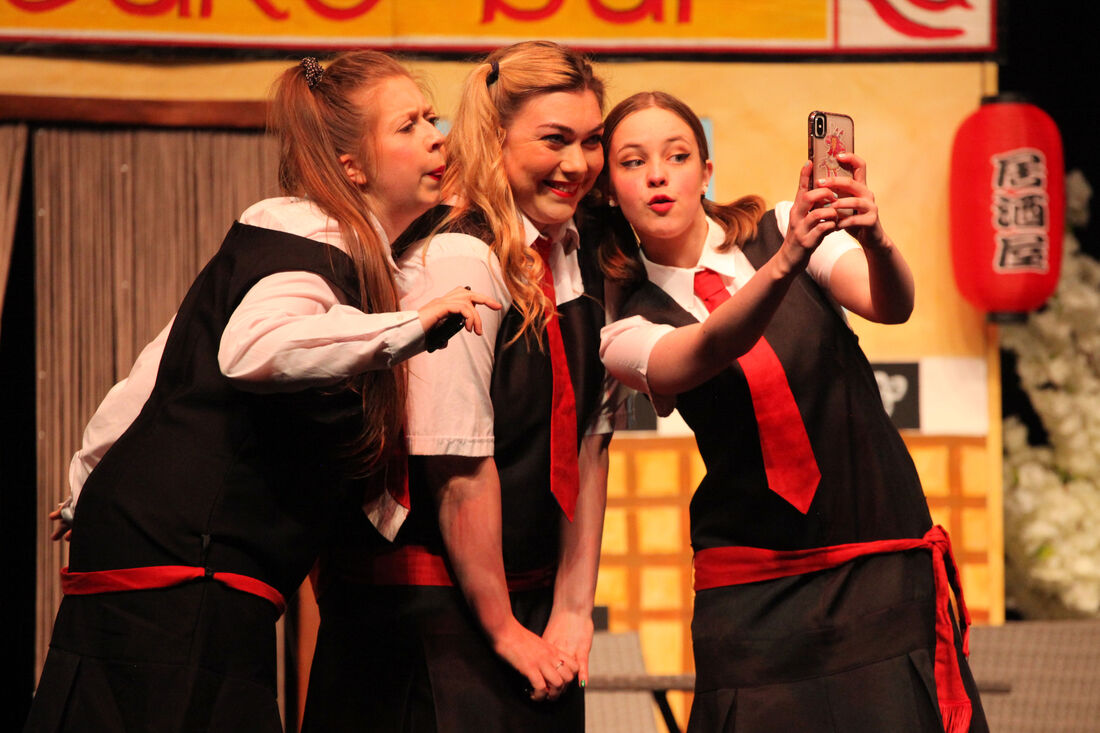
    • 2022 The Mikado
    • 2019 La Traviata
    • 2018 Eugene Onegin
    • 2017 The Magic Flute
    • 2016 Macbeth
    • 2015 Il Trovatore
    • 2014 Carmen
    • 2013 Madam Butterfly
    • 2011 Pinafore
    • (more pages coming but it'll take a while to get back to 1980!)
  • Recent events
  • Links
  • Members area
    • Who's who in OSE
    • Rehearsal tracks >
      • Onegin rehearsal tracks
      • Merrie England rehearsal tracks
  • Committee area
    • Policies, job specs, ...
    • Meeting minutes/actions
    • Production checklist
    • Concert checklist
    • Event plans
    • Future planning
    • Development areas
    • Press contacts
    • Local network
    • Email, website, IT
    • Combined event checklist
    • Salesforce procedures
  • Rehearsal dates

Welcome to Opera South East

Opera South East is based in Hastings and is one of the few companies in the South East to regularly perform opera with full chorus and orchestra. 

We attract established singers and musicians as well as young professional performers at the start of their career.  At its heart is a chorus of enthusiastic and friendly amateur singers under professional music and artistic direction. 

We welcome new members of all ages interested in any aspect of opera performance, be that on or off stage.

Box office

Forthcoming OSE events

OSE  Proudly Presents ... 

LA BOHEME by Puccini

on Wednesday 15th and Thursday 16th April 2026 at 7pm
at 
Christ Church, St Leonards-on-Sea, TN37 6GL

Director ​Marcio da Silva
Opera South East, in partnership with an 18-piece orchestra from the Hastings Philharmonic Orchestra, will produce an opera with two fully staged performances of Puccini's La Bohème. This will be delivered by OSE & HPO providing an academy for singers and conductors to work with chorus and orchestra.  

In a new format for OSE, this production is sung in English/Italian, with English Surtitles.


Marcio da Silva - Stage/Music Director

Marjorie da Silva - Stage Manager
Orlando Bishop - Set/Tech

Armand Birk, Jon Audric Nelson, Margarita Miikhailova, Marcio da Silva - Conductor
​
Opera South East
HPO Ensemble
HPO Songbirds


Principal performers
John Twitchen - Rodolfo
Ana Conjar, Annie Bennett - Mimi
Denzel Bruhn, Nattan Ferreira - Marcello
Beata Vymlatilova, Imogen Rowe - Musetta
Flávio Lauria - Schaunard
Jay Rockwell  - Colline
Chris Swithinbank - Benoit/Alcindoro
Jonathan Todd - Parpignol
John Rycroft - Sergeant

​​​
Running Time 2 hours 50 minutes, including 20 minute interval

Tickets £16.17, £21.56,£26.95
with discounts for young people

Tickets from HPO TicketSource

La bohème is a tale of love at first sight and the harsh reality of desperate poverty. This tragic story and Puccini’s beautiful music have made this one of the most frequently performed operas of recent times.

Four struggling bohemians – a poet, a painter, a musician, and a philosopher are living together in Paris, when one freezing Christmas Eve their lives are changed forever. A girl named Mimì knocks on their door looking for a light for her candle, and she and the poet Rodolfo fall in love.

However, the rush of love at first sight soon gives way to something much darker – it becomes clear that Mimì is desperately ill, and that Rodolfo, in his poverty, cannot provide for her. The bohemians are sharply awoken to the harsh realities of life…
 
La bohème was composed by Puccini between 1893 and 1895 to an Italian libretto by Luigi Illica and Giuseppe Giacosa. It is based on Henri Murger’s book Scenes de la vie de bohème, although major sections of acts two and three are the librettists' invention. 

​The story is set in Paris around 1830 and shows the Bohemian lifestyle of a poor seamstress and her artist friends, with the central focus being on the relationship between Rodolfo and Mimì. The opera was premiered in Turin in 1896.

Brief Synopsis

Act 1
On Christmas Eve, a group of bohemians living in Paris are barely surviving the harsh winter. They keep warm by feeding their stove with pages from the poet Rodolfo’s latest poem.

When Schaunard the musician arrives with funds from his latest commission, the group celebrate their good fortune. The landlord Benoît arrives, demanding rent but the group get him drunk instead. They all head out to celebrate but Rodolfo stays behind. Whilst alone, his neighbour Mimì knocks at the door asking for a light, as hers has gone out and she cannot find her way in the dark. Rodolfo, instantly infatuated, invites her to the café and they leave together.


Act 2
On a busy street in the Latin Quarter, Rodolfo and Mimì join the rest of the group at Café Momus. The painter Marcello spots his ex-lover Musetta with her wealthy admirer Alcindoro, though it is clear she has grown bored with him. Longing to return to Marcello, she sings a risqué song to get his attention. Musetta then orders Alcindoro away and steals a chance to fall into Marcello’s arms. When the bill arrives for their meal, Musetta declares that Alcindoro will pay for it when he returns, and they quickly flee the scene.


Act 3
Months later, Rodolfo and Mimì, though now a couple, are weathering tough times. Rodolfo is driven to despair by Mimì’s illness, which he fears is slowly killing her. Knowing that he can do nothing to help in the abject poverty in which they live, he has taken to being jealous and unkind in order to drive her away.

When Mimì discovers this, she confronts Rodolfo and the two agree to separate but are unable to do so right away. They agree to wait until spring. Musetta and Marcello also separate, much less amicably, after a fierce argument.
 
Act 4

Spring has come and gone, and Rodolfo and Mimì have separated. Marcello tells Rodolfo that Mimì has since started seeing a wealthy viscount and is living like a queen.
​
However, Musetta arrives later that day with a desperately ill Mimì, who she found wandering the streets. Together they help her to bed and each rush off to sell their belongings for medicine. Rodolfo and Mimì both declare their love for each other. Mimì is overwhelmed with a violent coughing fit, after which she drifts off to sleep. Shortly after Schaunard announces that she has died and Rodolfo weeps by her side…

Picture

Programme notes

​Puccini and the Bohemian life.
La bohème was undoubtedly coloured by Puccini’s own experiences whilst living as a penniless student at the Milan Conservatoire (1880–1883). He wrote ‘I lived that bohème, when there wasn’t yet any thought stirring in my brain of seeking the theme of an opera.’

The entertaining real-life incidents recorded in his letters make it clear that Puccini could relate to his four bohemians, living hand-to-mouth in their freezing garret, outwitting their creditors, and falling in and out of love. Indeed, Puccini’s landlord was a post office official, and had so little trust in his ability to pay the rent that he would open Puccini’s letters, which contained the monthly instalments of his scholarship, and take the rent money out himself.

One year Puccini shared his digs with fellow musician Mascagni, future composer of the hugely successful opera Cavalleria Rusticana. When Puccini’s creditors visited him, he would hide in the wardrobe while Mascagni told them he had gone out, and vice versa when Mascagni’s creditors called the next day. Such stories resonate with Act 1 of the opera where the four bohemians throw Benoît the landlord out of their apartment empty-handed, having got him drunk. Puccini and Mascagni’s lack of funds would often force them to cook in their room, which was strictly against the rules of their landlord. The two young men recall Puccini improvising as loudly as possible on the piano to drown any noise caused by the clatter of plates. We also know that Puccini once pawned his only coat so that he could take out a young ballet dancer from La Scala. This is reminiscent of Act IV of La bohème where Colline pawns his beloved coat, the final tie to warmth and comfort, to help the dying Mimì.

Puccini’s score is full of scene painting and each character has its own leitmotif. It is abundantly clear from his letters that this was a world he understood well, and Puccini brought to life its many nuances in his music: the atmosphere of a busy Parisian café, the boisterous energy of the bohemians as they work; stark wintriness; the desperation of poverty; the excitement of flirtation; the soaring joy of love and the devastation of grief.
   

Extended Synopsis

Act 1
Marcello is painting while Rodolfo gazes out of the window. They complain of the cold. To keep warm, they burn the manuscript of Rodolfo's drama. Colline, the philosopher, enters shivering and disgruntled at not having been able to pawn some books. Schaunard, the musician of the group, arrives with food, wine, and cigars. He explains the source of his riches: a job with an eccentric English gentleman, who ordered him to play his violin to a parrot until it died. The others hardly listen to his tale as they set up the table to eat and drink. Schaunard interrupts, telling them that they must save the food for the days ahead: tonight, they will all celebrate his good fortune by dining at Cafe Momus, and he will pay.

The friends are interrupted by Benoît, the landlord, who arrives to collect the rent. They flatter him and ply him with wine. In his drunkenness, he begins to boast of his amorous adventures, but when he also reveals that he is married, they drive him from the room - without the rent payment - in comic moral indignation. The rent money is divided for their evening out in the Latin quarter.

Marcello, Schaunard and Colline go out, but Rodolfo remains alone for a moment in order to finish an article he is writing, promising to join his friends soon. There is a knock at the door. It is a girl who lives in another room in the building. Her candle has blown out, and she has no matches; she asks Rodolfo to light it. She is briefly overcome with faintness, and Rodolfo helps her to a chair and offers her a glass of wine. She thanks him. After a few minutes, she says that she is better and must go. But as she turns to leave, she realizes that she has lost her key.

Her candle goes out in the draught, Rodolfo's candle goes out too, and the pair stumble in the dark. Rodolfo, eager to spend time with the girl, to whom he is already attracted, finds the key and pockets it, feigning innocence. He takes her cold hand (Che gelida manina - 'Your tiny hand is frozen’) and tells her of his life as a poet, then asks her to tell him more about her life. The girl says her name is Mimì (Sì, mi chiamano Mimì - 'Yes, they call me Mimì’), and describes her simple life as an embroiderer. Impatiently, the waiting friends call Rodolfo. He answers and turns to see Mimì bathed in moonlight (duet, Rodolfo and Mimì: O soave fanciulla - 'Oh lovely girl’). They realize that they have fallen in love. Rodolfo suggests remaining at home with Mimì, but she decides to accompany him to the Cafe Momus. As they leave, they sing of their newfound love.


Act 2
The Latin Quarter (same evening)

A great crowd, including children, has gathered with street sellers announcing their wares (chorus: Aranci, datteri! Caldi i marroni! - 'Oranges, dates! Hot chestnuts!’). The friends arrive; Rodolfo buys Mimì a bonnet from a vendor, while Colline buys a coat and Schaunard a horn. Parisians gossip with friends and bargain with the vendors; the children of the streets clamour to see the wares of Parpignol, the toy seller. The friends enter the Cafe Momus.

As the men and Mimì dine at the cafe, Musetta, formerly Marcello's sweetheart, arrives with her rich (and elderly) government minister admirer, Alcindoro, whom she is tormenting. It is clear she is tired of him. To the delight of the Parisians and the embarrassment of her patron, she sings a risqué song (Musetta's waltz: Quando me’n vo - 'When I go along'), hoping to reclaim Marcello's attention. The ploy works; at the same time, Mimì recognizes that Musetta truly loves Marcello. To be rid of Alcindoro for a bit, Musetta pretends to be suffering from a tight shoe and sends him to the shoemaker to get her shoe mended. Alcindoro leaves, and Musetta and Marcello fall rapturously into each other's arms.

The friends are presented with their bill. However, Schaunard's purse has gone missing and no one else has enough money to pay. The sly Musetta has the entire bill charged to Alcindoro. The sound of a military band is heard, and the friends leave. Alcindoro returns with the repaired shoe seeking Musetta. The waiter hands him the bill and, dumbfounded, Alcindoro sinks into a chair.


Act 3
At the toll gate at the Barrière d'Enfer (late February)

Peddlers pass through the barriers and enter the city. Mimì appears, coughing violently. She tries to find Marcello, who is currently living in a little tavern where he paints signs for the innkeeper. She tells him of her hard life with Rodolfo, who abandoned her the night before, and of Rodolfo's terrible jealousy (O buon Marcello, aiuto! – ‘Oh, good Marcello, help me!’). Marcello tells her that Rodolfo is asleep inside and expresses concern about Mimì's cough. Rodolfo wakes up and comes out looking for Marcello. Mimì hides and overhears Rodolfo first telling Marcello that he left Mimì because of her flirtatiousness, but finally confessing that his jealousy is a sham: he fears she is slowly being consumed by a deadly illness. Rodolfo, in his poverty, can do little to help Mimì and hopes that his pretended unkindness will inspire her to seek another, wealthier suitor (Marcello, finalmente - 'Marcello, finally’).

Out of kindness towards Mimì, Marcello tries to silence him, but she has already heard all. Her weeping and coughing reveal her presence, and Rodolfo hurries to her. Musetta's laughter is heard, and Marcello goes to find out what has happened. Mimì tells Rodolfo that she is leaving him and asks that they separate amicably (Mimì: Donde lieta uscì – ‘From here she happily left’); but their love for one another is too strong for the pair to part. As a compromise, they agree to remain together until the spring, when the world is coming to life again and no one feels truly alone. Meanwhile, Marcello has found Musetta, and the couple quarrel fiercely about Musetta's flirtatiousness: a counterpoint to the other pair's reconciliation (quartet: Mimì, Rodolfo, Musetta, Marcello: Addio dolce svegliare alla mattina! – ‘Goodbye, sweet awakening in the morning!’).


Act 4
Back in the garret (some months later)

Marcello and Rodolfo are trying to work, though they are primarily talking about their girlfriends, who have left them and found wealthy lovers. Rodolfo has seen Musetta in a fine carriage and Marcello has seen Mimì dressed like a queen. The men both express their nostalgia (duet: O Mimì, tu più non torni - 'O Mimì, will you not return?’). Schaunard and Colline arrive with a very frugal dinner and they parody eating a plentiful banquet, dance together and sing, before Schaunard and Colline engage in a mock duel.

Musetta suddenly appears; Mimì, who took up with a wealthy viscount after leaving Rodolfo in the spring, has left her patron. Musetta found her that day in the street, severely weakened by her illness, and Mimì begged Musetta to bring her to Rodolfo. Mimì, haggard and pale, is assisted onto a bed. Briefly, she feels as though she is recovering. Musetta and Marcello leave to sell Musetta's earrings to buy medicine, and Colline leaves to pawn his overcoat (Vecchia zimarra - 'Old coat’). Schaunard leaves with Colline to give Mimì and Rodolfo some time together. Mimì tells Rodolfo that her love for him is her whole life (aria/duet, Mimì and Rodolfo: Sono andati? – ‘Have they gone?’).

To Mimì's delight, Rodolfo presents her with the pink bonnet he bought her, which he has kept as a souvenir of their love. They remember past happiness and their first meeting - the candles, the lost key. Mimì is overwhelmed by a seizure of coughing. The others return, with a gift of a muff to warm Mimì's hands and a cordial to soothe her cough. Mimì gently thanks Rodolfo for the muff, which she believes is a present from him, reassures him that she is better, and falls asleep. Musetta prays. Schaunard discovers that Mimì has died. Rodolfo rushes to the bed, calling Mimì's name in anguish. He sobs helplessly as the curtain falls.   

Rehearsal snippet preview


Picture
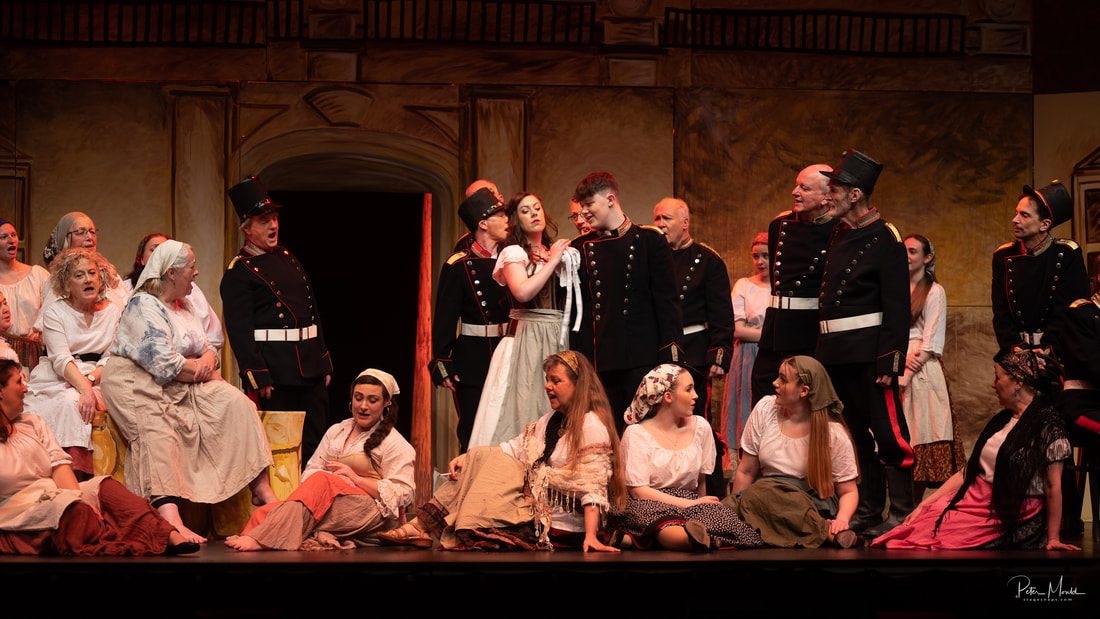
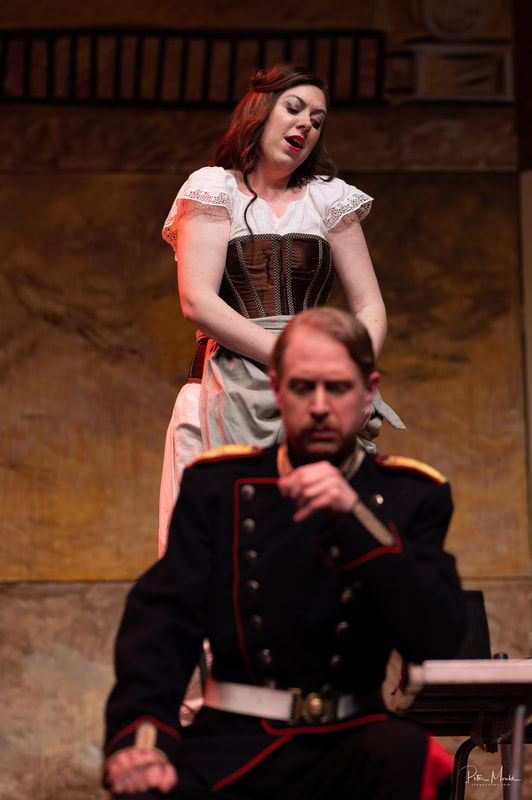
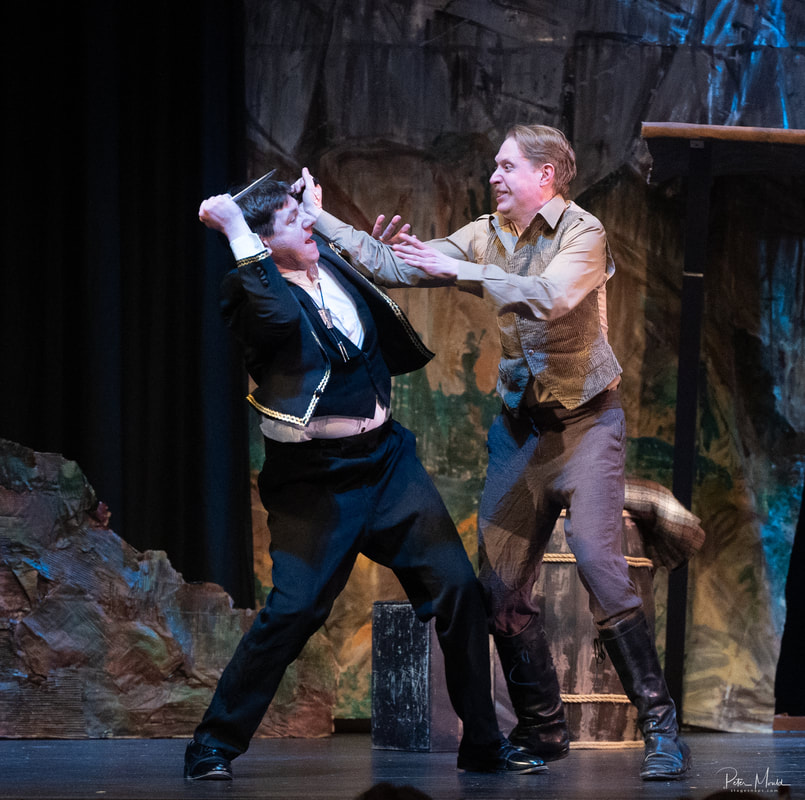
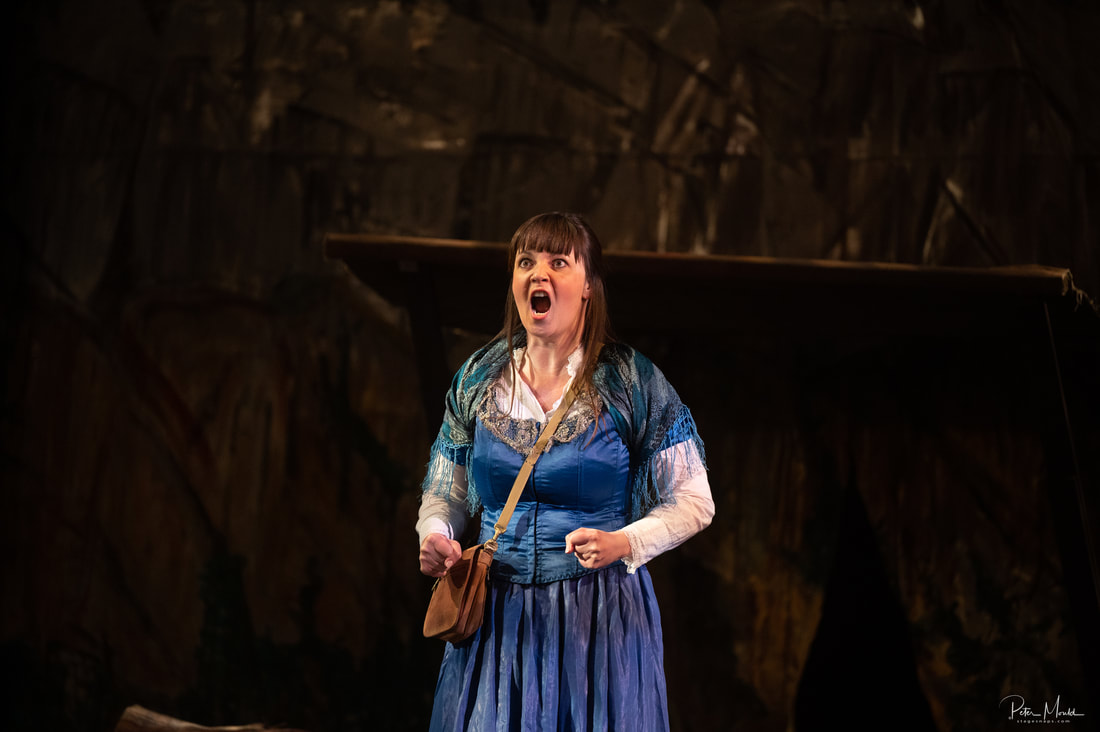
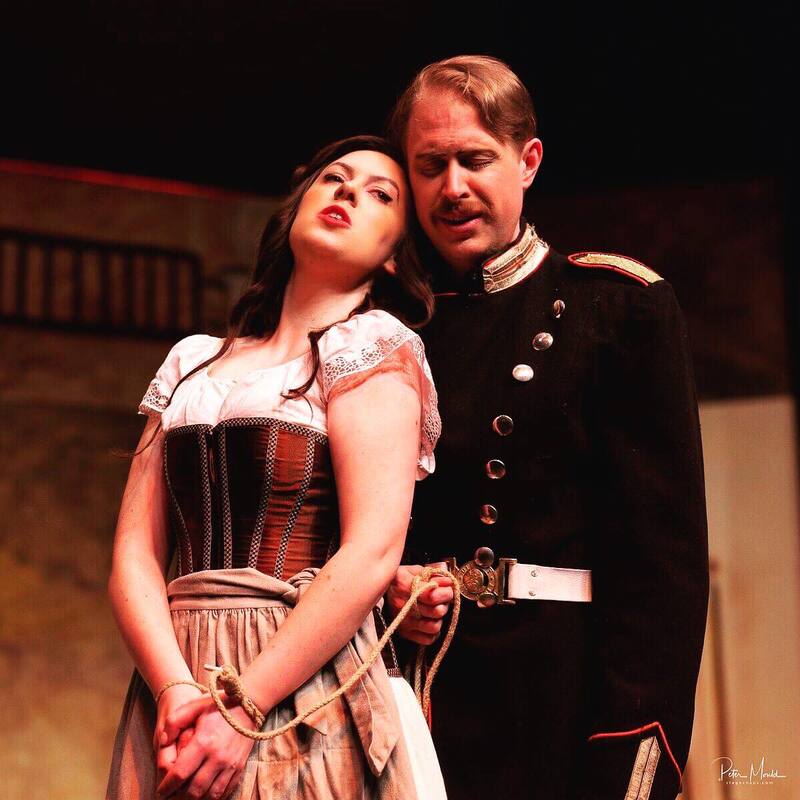
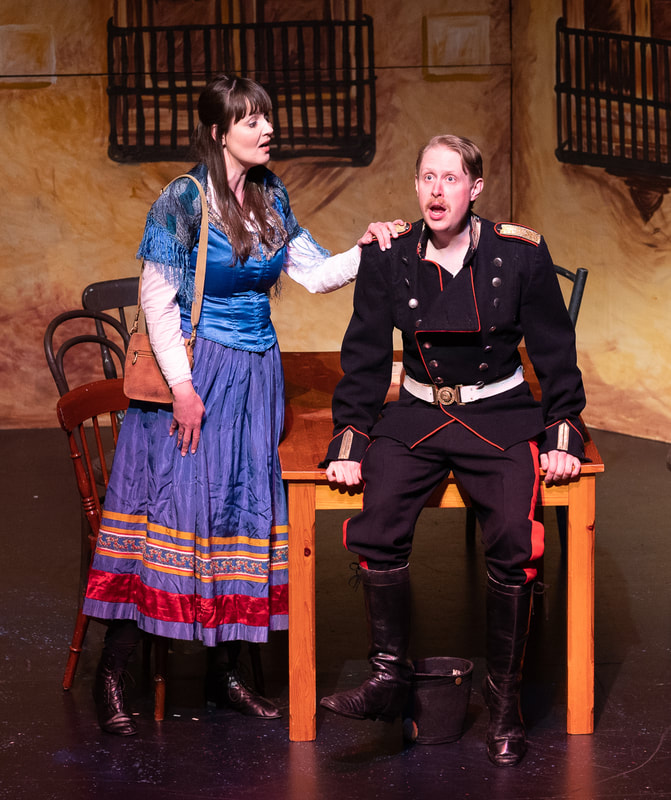
Carmen 2023 rehearsal photos.photos courtesy of Peter Mould

Picture
Picture
Picture

Join our OSE Chorus as a new singing Member

Calling all New Chorus - Consider joining our Chorus line for rehearsals for our next concert or opera production - see Join our chorus and apply
Join our Chorus

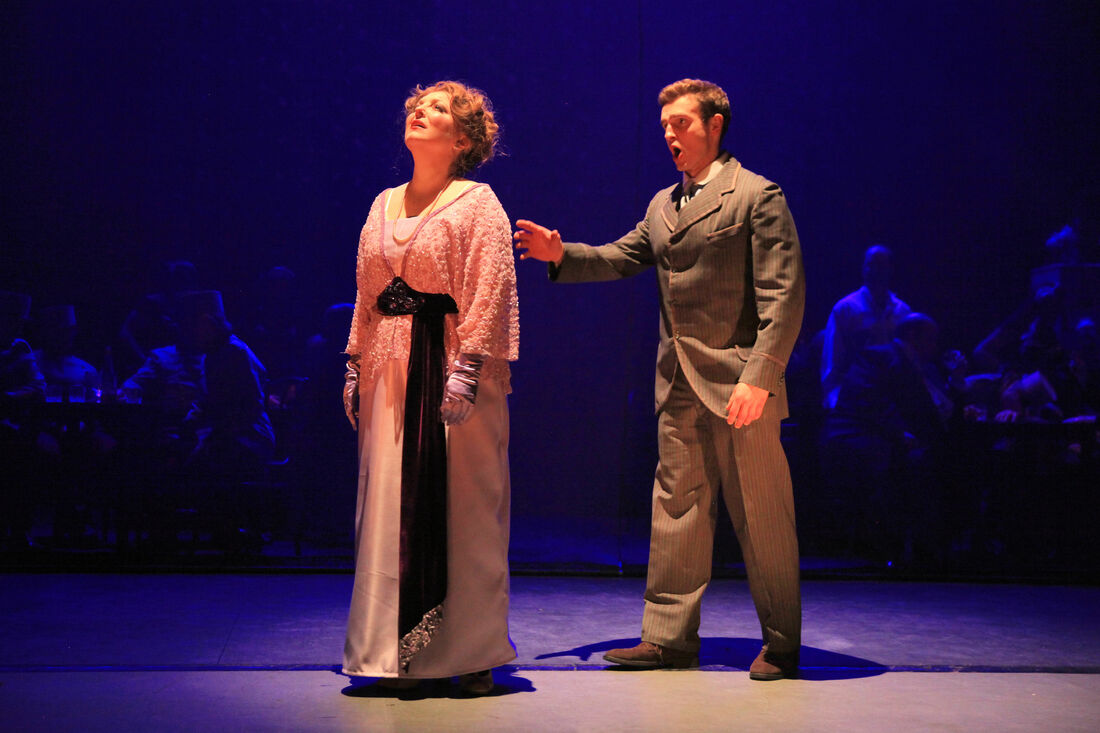
Recent Operas - 2019 - La Traviata

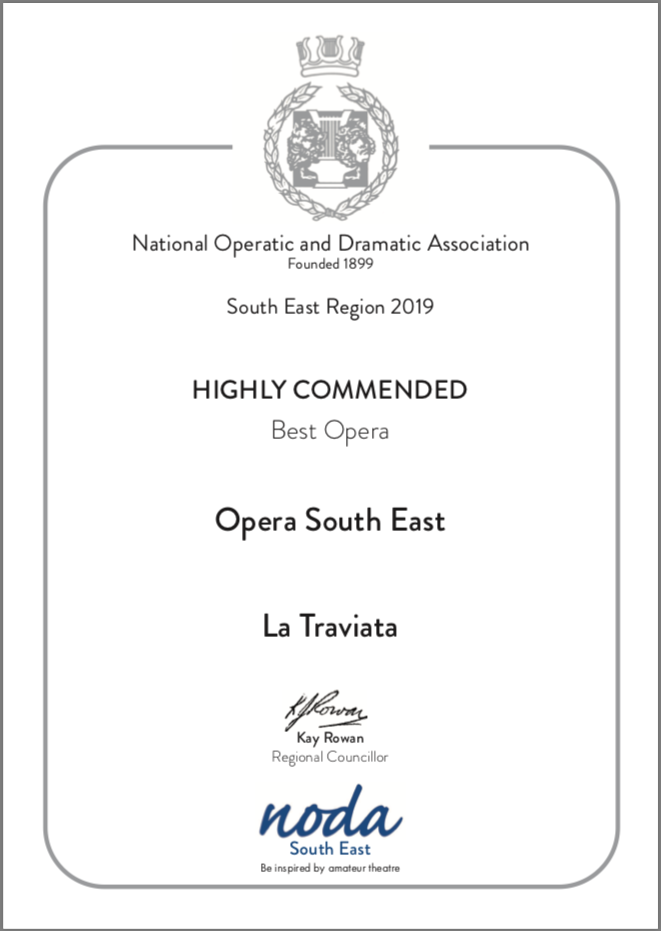
Awarded 'Highly Commended' by NODA on 19 April 2020
Picture

Picture
2022 rehearsals for The Mikado are (again) in progress after a second year of delays due to Covid, courtesy of Mark Duncan
Picture

Picture

A fully-staged opera production of Carmen 
​
21-22 April ​2023

Picture
Picture
Carmen 2023, photos courtesy of Peter Mould
Awards for OSE!

We are thrilled to announce today (19 April 2020) that OSE has today been awarded a Highly Commended accolade by NODA's South East Region (National Operatic and Dramatic Association) in the Best Opera category for 2019 performances for our production of La Traviata. Congratulations to the OSE cast of chorus, principals, the dancers, to Fraser Grant, Kenneth Roberts, to the Sussex Concert Orchestra, to the back-stage crew, and to all who have helped with admin and other support. Principals were Kristy Swift, Julia Bovee, Karen McInally, Harry Kersley, Arthur Coomber, Alexander S-Roberts, Oscar Smith, John Rycroft, David Woloszko, Jack Naismith, and Maya Godlonton-White.
The official NODA presentation is of course delayed due to the pandemic.
Well done all of you! 
We also won Best Opera for our 2018 production, Eugene Onegin
and won an Accolade of Musical Excellence for our 2015 Carmen.
Link for more info...

OSE on BBC Radio 4

Monday 4 April 2022 - we got a mention on BBC's The Unbelievable Truth - 2 mins 50 secs in!  OK, so it wasn't a 'truth' and was purportedly based in Southend, but fun nonetheless.  Did they know we had a production that weekend?  Thank you!

Past production - Eugene Onegin - 2018

​The Magic Flute 2017

Picture

Audience comments from 8 April 2022 - The Mikado

"I've seen the Mikado several times but I think this was the best for characterisation and character."

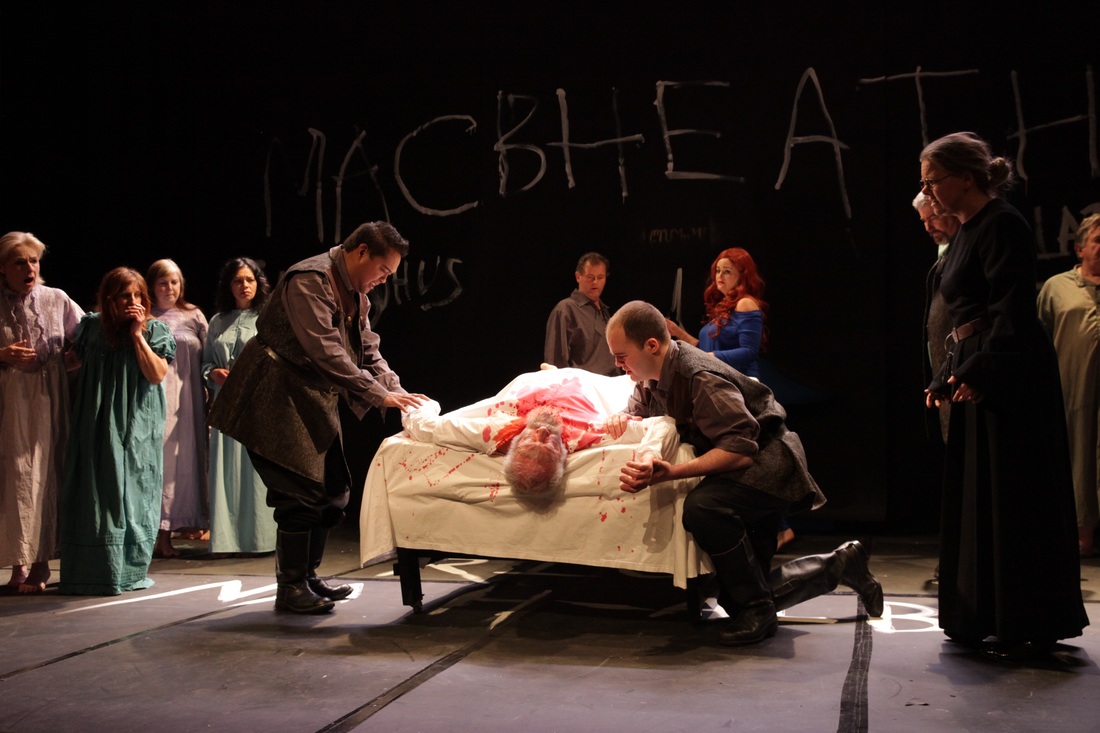
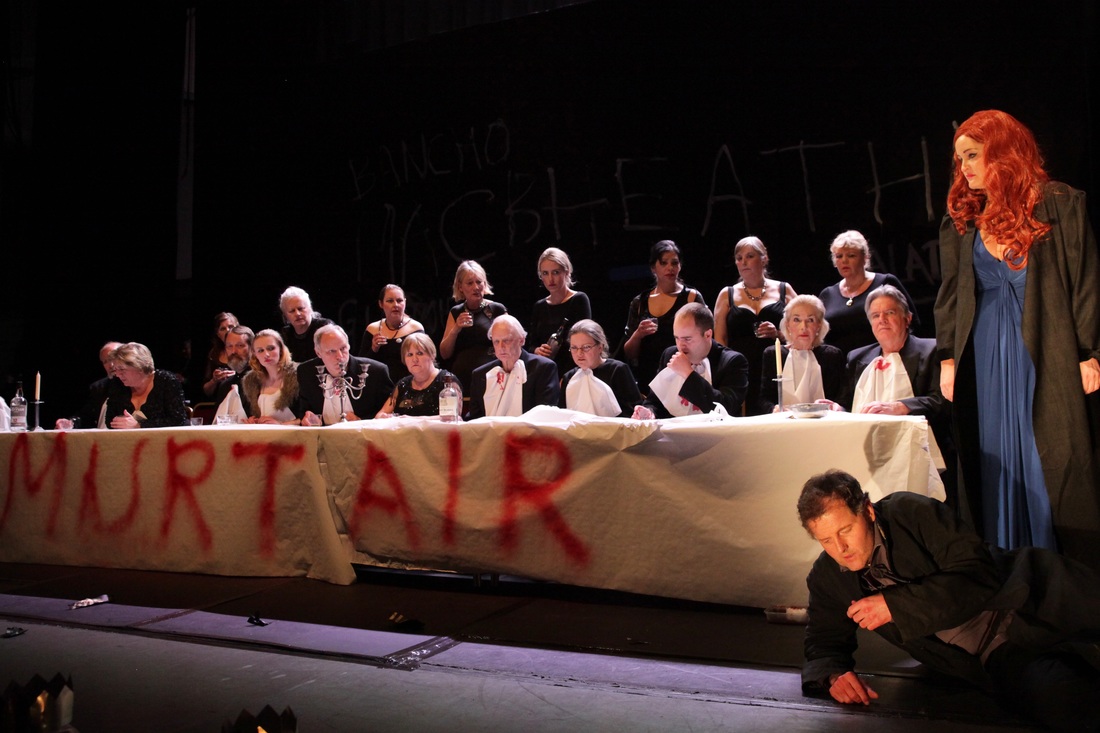
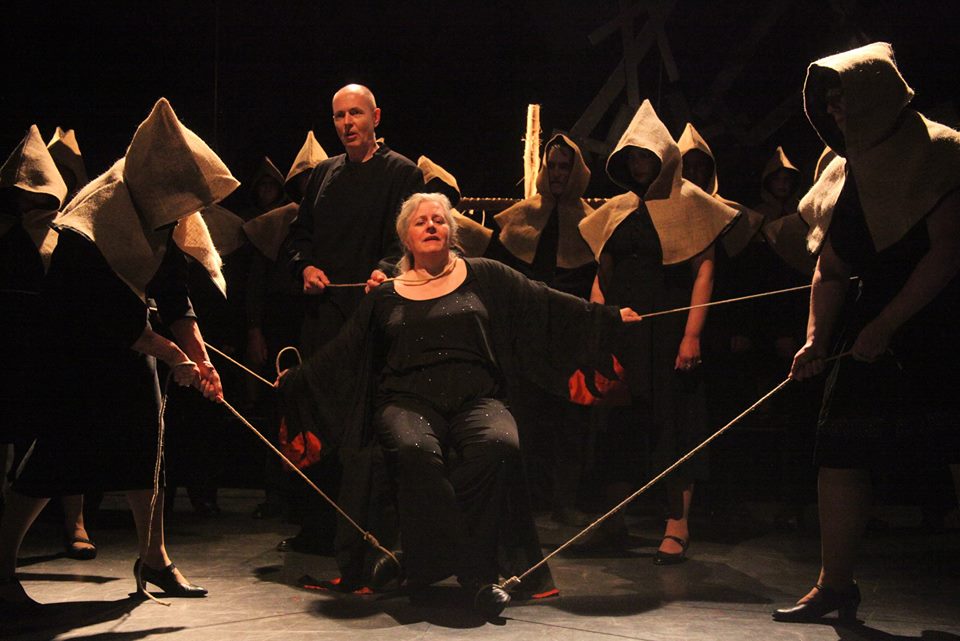
2016 Macbeth Act 2 Finale after Banquo’s assassination, with ailing Macbeth and embarrassed dinner guests, photos courtesy of Mark Duncan
Picture
Picture
Picture
Picture

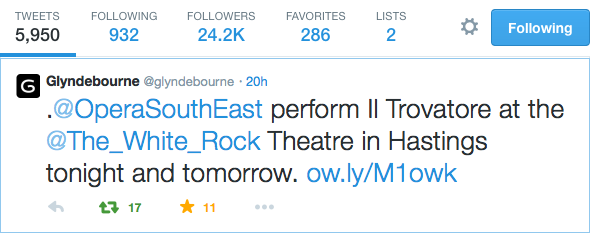
@OperaSouthEast With thanks to Glyndebourne for tweeting us
Picture
Picture
Azucena and the Count Di Luna with the chorus of soldiers, Act 3 No.10 Scena and Terzetto, Il Trovatore, April 2015

Video Clip from Il Trovatore Sitzprobe with the SCO

​(by kind permission of members of the Sussex Concert Orchestra)
Mari Wyn Williams singing from Act IV of Il Trovatore with the Sussex Concert Orchestra - Monday 20th April.  Recorded on an iPhone without a proper mic but OK actually!  If the video picture is not buffering well then we suggest you download the video and play it locally for best results - free to download for non-commercial purposes (copyright OSE 2015)
Carmen, 2014 - Gemma Morsley (Carmen) and Barnaby Beer (Zuniga)
Picture
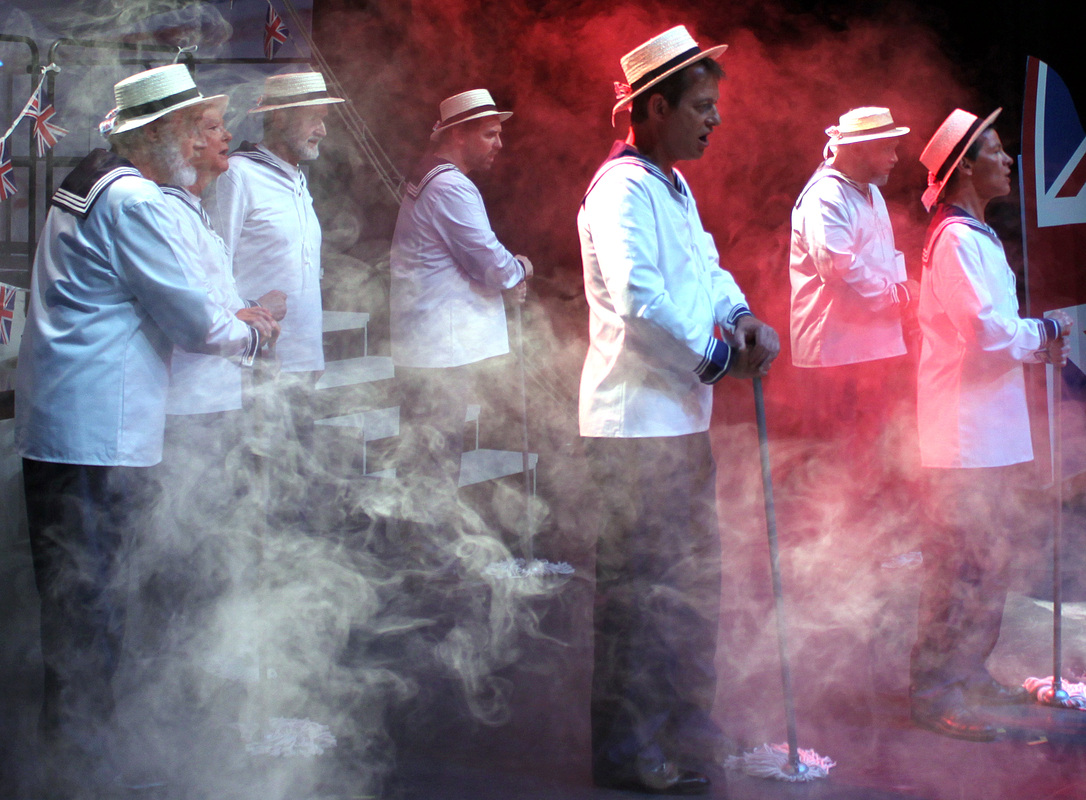
H.M.S. Pinafore, 2011

Rent a Choir !

If you have a wedding or other event for which you'd like to hire a choir of say 15 then consider Opera South East.  A regular event would typically cost £500, plus £100 for an organist.  Contact our Chairman...
Picture
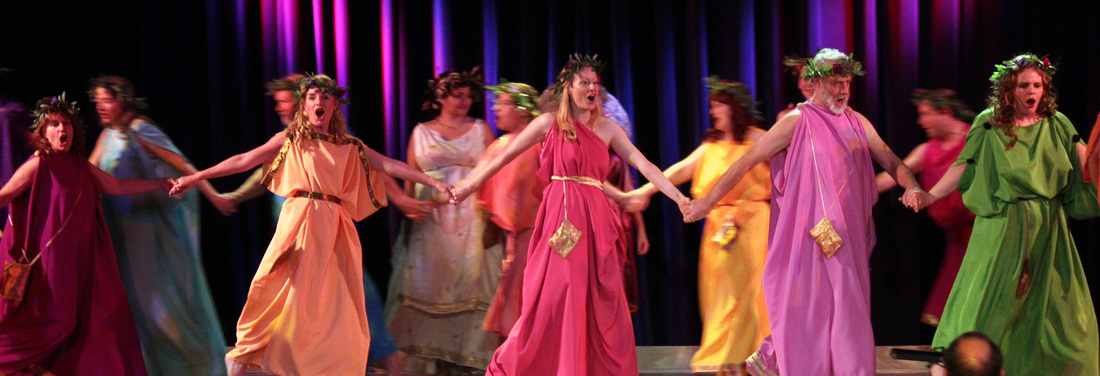
Orpheus and Eurydice, 2009
Picture
With special thanks to The Sussex Concert Orchestra for your continued support of OSE
Picture
Domain & email kindly provided by Laton Technical  

Proudly powered by Weebly